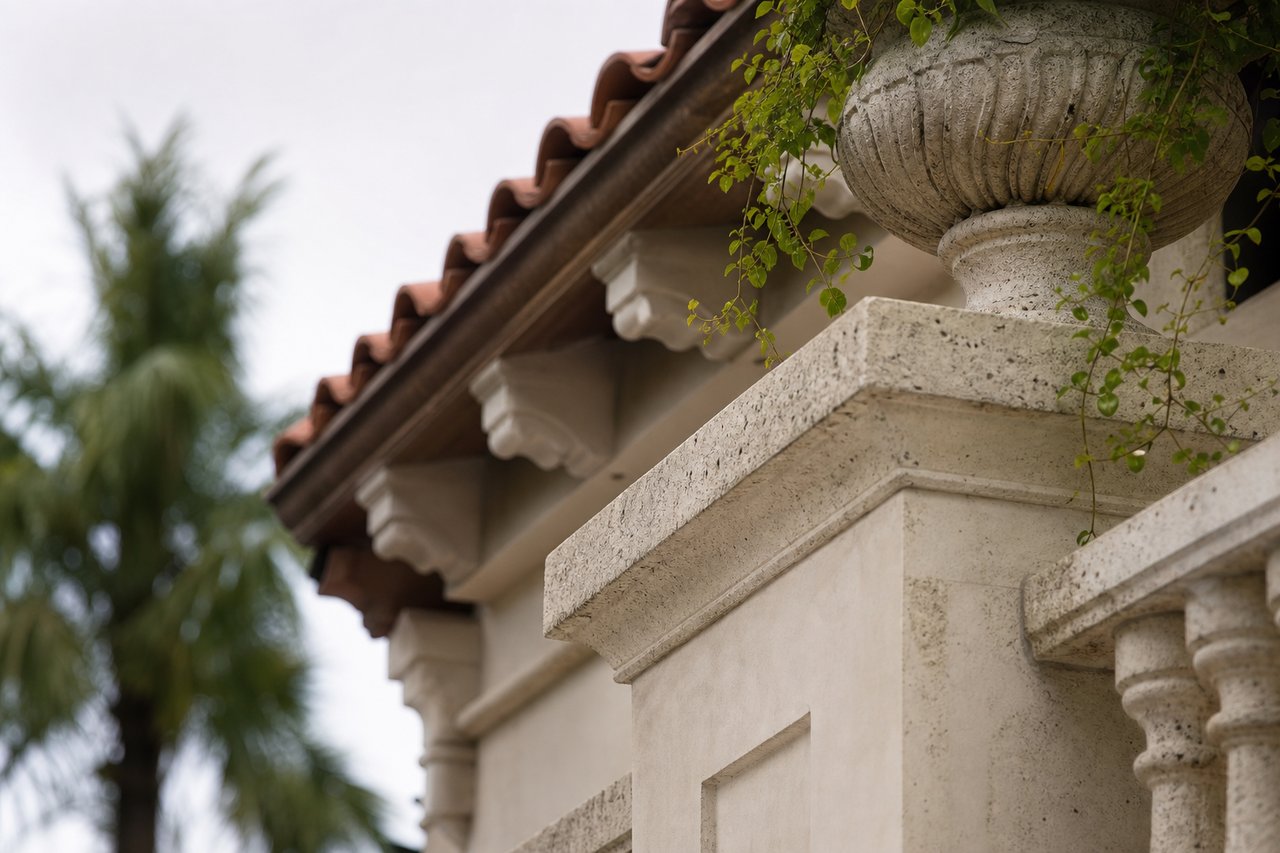
Living in Coral Gables means canopy streets, coral-rock facades, and a city hall that looks borrowed from Seville, none of it is accidental. Developer George Merrick built this city in the 1920s with a single architectural vision, and a century later, the city still enforces it through its Board of Architects and longstanding design-review standards. Few Miami neighborhoods actually deliver what they advertise. Coral Gables is one of the exceptions, and that level of intention shows in every block.
Over 15 years guiding buyers through Coral Gables, Elaine Kauffmann of Luxury Real Estate Miami says the most common question she fields isn't about square footage or school ratings. It's "Will I actually be happy here?" This guide answers that, with specific neighborhood breakdowns, current 2026 pricing, school data, and the honest tradeoffs most listings skip entirely.
The Character That Sets Coral Gables Apart
George Merrick didn't just build houses. He designed an entire city to a single visual standard, Mediterranean Revival, complete with stucco walls, clay tile roofs, arched loggias, and native coral rock woven into civic landmarks. The Biltmore Hotel, the Venetian Pool, and City Hall all reflect that original vision. What's remarkable is how much of it survived.
Coral Gables still operates its own Board of Architects, which reviews new construction and renovations against the city's design standards. That oversight is why wide boulevards like Alhambra Plaza and Ponce de Leon Boulevard feel deliberately curated rather than accidentally charming, both were laid out as part of Merrick's original planning framework. In a city where most neighborhoods shift in every direction simultaneously, Coral Gables controls its own evolution. The result is one of the most visually coherent residential environments in South Florida.
The lifestyle that comes with this setting is equally distinctive. Coral Gables has a walkable downtown core, world-class dining within a short stroll, and a pace that contrasts sharply with Brickell or South Beach. It attracts buyers who want sophistication without the noise, and many residents who settle here remain for decades.
Living in Coral Gables: Neighborhoods, Costs, and Daily Life
Coral Gables is not a single market. It's a collection of distinct submarkets, each with its own price range, buyer profile, and street character. Understanding which one fits your lifestyle is the most important decision you'll make before committing to a search.
The Urban Core: Miracle Mile and Downtown Coral Gables
Miracle Mile anchors the city's walkable downtown across roughly four city blocks, lined with restaurants, boutiques, and galleries. The dining scene has undergone a quiet renaissance in recent years, with spots like Luca Osteria drawing serious food attention without the South Beach crowds. For professionals, downsizers, and buyers who want proximity to everything, this is the natural landing spot.
Housing in the downtown core skews toward condos and townhomes. Condo values average around $628,000 citywide, with top-tier units in premier buildings climbing well above $1 million. Single-family homes on adjacent streets start near the $1 million mark. The entry price is lower here than in other Coral Gables submarkets, making downtown a practical first foothold in the city.
The Historic Residential Core: Central Gables and Ponce-Davis
The Golden Triangle and Biltmore area represent the quintessential Coral Gables streetscape: 1920s Mediterranean Revival homes on tree-lined lots, priced generally from $1.1 million and rising sharply with size, condition, and architectural integrity. Families drawn to the city's school system often plant roots here, within walking distance of top-rated elementary schools and the Biltmore Hotel grounds.
Ponce-Davis is a different category entirely. Large dry lots and mature tree canopies define the submarket. Prices frequently start at $3 million and climb to $20 million or more, making this one of Miami's most coveted non-waterfront submarkets. Buyers here aren't shopping for a home; they're acquiring an estate. According to recent Miami-Dade sales data, Ponce-Davis has consistently performed among the priciest dry-lot markets in the county, which makes it as much an investment consideration as a lifestyle one.
Waterfront Enclaves: Gables Estates, Cocoplum, and Gables by the Sea
These are Coral Gables at its most exclusive. Gables Estates is guard-gated and fully private, with direct Biscayne Bay access. Listed properties range from $5.5 million to $48 million. Cocoplum and Gables by the Sea offer slightly more accessible waterfront entry points, still firmly in the $2 million to $10 million-plus range. Buyers in these enclaves are almost exclusively high-net-worth, frequently international, and place the highest premium on security, privacy, and dock access.
Schools, Parks, and the Texture of Daily Life
For families, school quality is often the deciding factor between Coral Gables and every competing neighborhood. The city holds up well under scrutiny. According to the Florida Department of Education's most recent evaluation cycle, all public schools in Coral Gables earned an A or B rating. Three schools carry a 10/10 GreatSchools rating: Coral Gables Preparatory Academy, Henry S. West Laboratory School, and George W. Carver Elementary.
Coral Gables Senior High enrolls nearly 2,800 students and offers a wide range of academic and extracurricular programs. Private school options are equally strong. Gulliver Academy, Gulliver Preparatory, Riviera Day School, Saint Thomas Episcopal Parish School, and the French-American School of Miami all serve the area, giving families genuine flexibility across academic philosophies and price points. Few Miami neighborhoods offer this density of top-rated public and private schools within city limits.
Outdoor life in Coral Gables has real texture beyond the famous Venetian Pool, which is carved from a former coral rock quarry and spring-fed. Fairchild Tropical Botanic Garden sits at the city's southern edge, Matheson Hammock Park offers calm bay swimming and picnic grounds, and the Old Cutler Trail provides a shaded multi-use corridor for cycling and running. Daily life here doesn't require leaving the city to find something worth doing.
What Housing Actually Costs When Living in Coral Gables
The median sale price in Coral Gables sits at approximately $1.70 million as of mid-2026, essentially flat year-over-year. That number hides enormous range. A central historic home on a modest lot can trade between $1.1 million and $1.5 million, while Ponce-Davis estates routinely exceed $5 million and waterfront Gables Estates properties stretch to $48 million. Treat the median as a starting point; in this city, neighborhood and lot position do most of the pricing work.
For buyers not ready to commit to a seven-figure single-family purchase, the condo market near downtown offers a legitimate alternative. Average condo values hover around $628,000, with newer or larger units climbing well past $1 million in select buildings. It's a real way into Coral Gables without the maintenance demands of a historic estate.
The broader Coral Gables cost of living adds important context. The city runs about $9,500 above the national average in annual household costs. A single resident should budget roughly $2,850 per month all-in; a family of four lands closer to $6,600 per month. Median rent for those not buying currently sits at approximately $3,800 per month, down slightly year-over-year. Property taxes in Miami-Dade, calculated at roughly 1.8% of assessed value annually, add meaningfully to monthly carrying costs. On a $2 million home, the annual tax bill often lands between $20,000 and $28,000 depending on homestead exemption status.
The Honest Tradeoffs Before You Commit
Coral Gables to Brickell runs 10 to 20 minutes by car outside rush hour. During peak morning traffic on US-1 or SW 8th Street, that can increase by roughly 10 to 20 minutes. Public transit options exist, including Metrorail service to Brickell in approximately 8 to 15 minutes, but the network is limited compared to what Brickell or Downtown residents can access on foot. Residents who work within Coral Gables, or who can flex their schedule, absorb the tradeoff without much friction. Those commuting daily to Miami International Airport or locations north of Downtown should map their actual route before committing to a neighborhood in the southern reaches of the city.
Gated communities in Gables Estates and Cocoplum carry HOA fees that range from a few hundred to well over $1,000 per month, with some luxury listings showing fees approaching $1,800 per month. These fees cover security, common area maintenance, and the infrastructure that keeps those enclaves functioning at their level. They're not negotiable, and they're not going away. Factor them into any carrying-cost calculation from the start.
Coral Gables suits families who prioritize school quality, professionals who want a refined but relaxed neighborhood atmosphere, and buyers who value architectural character and long-term price stability. Buyers who need urban energy, active nightlife, or price flexibility below the $600,000 mark may find Brickell, Midtown, or Wynwood a more natural fit. Knowing which category you're in before touring homes saves everyone time.
Moving to Coral Gables: Finding the Right Home
Coral Gables is not a market where a generalist thrives. Neighborhood pricing varies sharply from block to block. Historic deed restrictions affect what you can build or renovate. Off-market inventory in enclaves like Gables Estates and Ponce-Davis rarely hits the MLS, and those private listings are often the strongest opportunities available. An advisor with deep Coral Gables relationships will know which pocket streets are appreciating fastest, which buildings carry pending special assessments, and which sellers are quietly ready to move before listing publicly.
Elaine Kauffmann of Luxury Real Estate Miami has facilitated over $80 million in South Florida sales, with Coral Gables among her most active submarkets. Her background in art and media publicity means listings receive premium exposure through bespoke marketing plans built for each property. Her neighborhood knowledge means buyers receive honest guidance on value, fit, and long-term potential, rather than a generic tour of what's available on the open market. For buyers and sellers ready to move from research to real conversations, her current Coral Gables listings and market data are the natural next step.
Coral Gables Earns Its Reputation
Life in Coral Gables delivers something rare in Miami: a city with genuine architectural identity, exceptional school infrastructure, and a residential pace that draws serious buyers back repeatedly. The streets are quieter than Brickell. The school ratings are real. The city's long-running design standards have historically preserved visual character across decades, which supports long-term desirability and price stability in ways that less regulated neighborhoods simply can't replicate.
If you're considering living in Coral Gables, the question usually isn't whether the neighborhood delivers, it's which part of it suits you best. Those who value quiet canopy streets, top-rated public schools, and Mediterranean character will find the fit immediate. If budget is the primary constraint, the condo market near Miracle Mile remains the most practical entry point into the city. The best decisions about buying or selling here start with the right data and the right advisor on the ground.