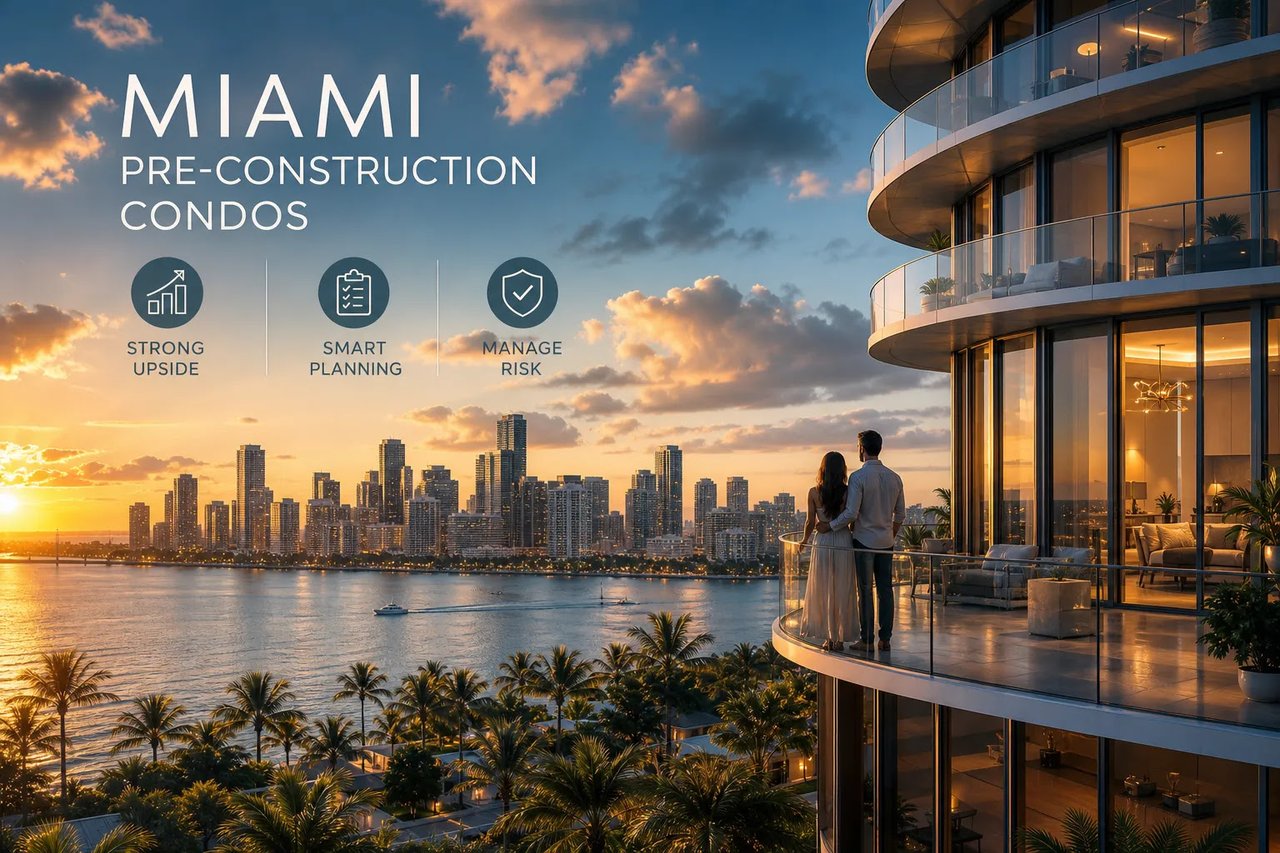
Miami preconstruction condos are commanding serious attention in 2026, and the numbers explain why: more than 60 active luxury developments are currently in the pipeline, spanning Brickell, Edgewater, Coral Gables, Coconut Grove and Miami Beach. That scale of inventory makes the opportunity feel expansive. It also makes the stakes of choosing wrong considerably higher than most buyers anticipate when they first start exploring off-plan purchases.
This guide breaks down exactly what the pre-construction buying process looks like in Miami, what deposit structures to expect, which developers have earned a strong track record, and what the honest risk-reward picture looks like for a buyer entering this market right now. Readers who want a seasoned advisor in their corner as they navigate this process will find that working with a specialist like Elaine Kauffmann, a Miami luxury real estate professional with deep pre-construction advisory experience, changes both what you can access and how well you are protected through every stage of the transaction.
How the Miami pre construction condo buying process works
From reservation to certificate of occupancy: the key milestones
The transaction arc starts well before any construction begins. A reservation agreement, typically requiring a deposit between $20,000 to $50,000, secures your place in line and is generally refundable until you sign the formal Purchase and Sale Agreement. Once you sign that binding contract, the process moves through a series of construction milestones: groundbreaking, foundation completion, topping off, and mechanical completion. The remaining balance is due when the building receives its Certificate of Occupancy, the legal signal that the unit is ready for closing.
Build cycles in Miami currently run approximately two to four years from contract signing to delivery, depending on the tower and permitting timeline. That gap has meaningful implications for buyers counting on near-term occupancy or expecting quick price appreciation. It also means your capital is committed across multiple years, so planning your liquidity around the milestone schedule is essential from day one.
What your contract is really committing you to
Florida law gives buyers of new condominium developments a 15-day statutory rescission period, measured from the later of contract signing or receipt of the required disclosure package. After that window closes, deposits become non-refundable. What surprises many buyers is how much control the developer retains after signing: many developer contracts allow substitutions to finishes and specifications, adjustments to delivery dates, and broad force majeure provisions with limited buyer remedy. The specific language varies, so reviewing representative contract clauses with an experienced advisor before you sign is essential.
Contract language around delays, substitutions, and deposit forfeiture matters enormously. Having an experienced advisor review the Purchase and Sale Agreement before you sign is not optional. Developer contracts are written by developer attorneys to protect the developer, not the buyer. The 15-day rescission window is your primary statutory exit, though some contracts include additional protections tied to financing contingencies or pre-sale thresholds, both of which vary and should be negotiated before signing.
What deposit structures actually look like in 2026
The staged payment timeline most Miami developers use
The most common 2026 structure begins with a reservation deposit of roughly $20,000, followed by 10% of the purchase price at contract signing. Additional tranches of 10% are then triggered at groundbreaking and again at a mid-construction milestone, often with a final pre-closing installment of 10%. Total pre-closing deposits across Miami luxury towers typically range from 30% to 50% of the purchase price, with ultra-luxury projects trending toward the higher end of that range. For a deeper look at the pre-construction condo process, deposits, timelines, and risks, consult specialist write-ups that walk through milestone timing and common developer structures.
On a $2 million unit, that means committing $600,000 to $1,000,000 before you ever hold title. That figure is what you should stress-test against your liquidity, investment horizon, and financing plan before you sign anything. Confirming you have sufficient liquid reserves ahead of each milestone, particularly the groundbreaking tranche, is a step buyers often underestimate until it arrives.
Escrow rules and how your deposit is protected
Florida law requires pre-construction deposits to be held in escrow, which is your primary protection if the developer fails to complete the project. The reservation deposit is held in a refundable escrow until you sign the Purchase and Sale Agreement. Post-contract deposits are typically non-refundable after the rescission period expires, which is why that window matters so much.
If a project is cancelled because the developer fails to secure financing or hit required sales thresholds, the contract should specify how escrowed funds are returned. Buyers should also confirm whether their contract addresses interest earned on escrowed deposits during the construction period, since that detail is often negotiable and frequently overlooked. For an end-to-end primer on buying off-plan in Miami, see this comprehensive guide to buying a pre-construction property or condo in Miami.
Miami pre construction condo projects worth watching right now
Luxury towers with strong price-to-value fundamentals
Four projects stand out in the current Miami condo presales pipeline for the combination of brand strength, confirmed price guidance, and clear delivery timelines. Waldorf Astoria Residences Miami offers 360 residences starting from approximately $1.2 million, with a Q1 2027 delivery. St. Regis Residences Brickell brings 152 ultra-luxury units from $4.6 million, targeting Q4 2027. VILLA MIAMI, with 47 residences starting from $6 million and a penthouse at $55 million, is scheduled for Q4 2027. Cipriani Residences Brickell rounds out the group with 397 units of approximately $2.2 million and a projected 2028 delivery. Elaine's market coverage also highlights the most interesting new property developments in Miami Beach and adjacent neighborhoods for buyers seeking early access.
Pricing trends reinforce the case for early entry. The median price per square foot in Miami's $1 million-plus condo market rose from approximately $986 in 2024 to over $1,030 in 2025, with some 2026 new-construction product reaching $1,080 or more per square foot. In Sunny Isles Beach, buyers who entered well-chosen branded projects two to four years ago have seen documented price-per-square-foot appreciation of up to approximately 35%, with pockets of strong gains in South Beach as well. The earlier you enter a well-selected project, the more distance you create between your contract price and the market value at delivery. For perspective on market timing and whether now is a good entry point, review the analysis in Best Time to Buy in Miami? Why 2025 Favors Buyers.
Which neighborhoods are seeing the most new development activity
Brickell leads the Miami pre-sale residences 2026 pipeline in both volume and brand-name hotel residences, with St. Regis, Cipriani, and Baccarat all active in the submarket. Edgewater and Desing District are drawing younger luxury buyers, with Villa Miami representing one of the most closely watched towers in that corridor. Coconut Grove is home to boutique ultra-luxury supply, including the Four Seasons Private Residences with just 70 homes starting from approximately $5.62 million.
Each neighborhood carries a different price floor, lifestyle profile, and mix of investor versus end-user demand, distinctions that shape both the buying experience and the long-term resale trajectory. For a broader market frame, see reporting on the Miami Condo Market 2026: Shift Toward a Buyer's Market.
How to vet a developer before you sign anything
Builders with a proven delivery track record
Miami's recent market has produced a clear tier of developers with strong delivery records. Terra Group completed 900 Biscayne Bay and Quantum on the Bay. Two Roads Development delivered Biscayne Beach and Elysee Miami. Fortune International Group is behind Cipriani Residences Miami and The Perigon. Mast Capital and OKO Group share credit for Missoni Baia and Una Residences, with OKO also involved in the Aman Tower pipeline.
A developer's build history in Miami specifically matters more than their portfolio elsewhere. Local permitting relationships, subcontractor networks, and familiarity with Miami-Dade's inspection process directly affect whether a project delivers on time and to the promised specification. A developer who has successfully completed multiple towers in this market has already solved problems that a newcomer has not yet encountered.
Red flags to screen before you commit
Before signing, confirm the developer has secured construction financing. Projects that are still seeking financing after launching sales carry meaningful cancellation risk if that financing never materializes. Check whether there is a track record of completed Miami buildings you can physically tour and evaluate, and look for any active lawsuits related to prior projects or allegations of material misrepresentation in marketing.
Also confirm the project has hit its required presales threshold. A buyer entering a tower at 20% sold may be subsidizing a launch that still needs another 30% of contracts before groundbreaking can occur. An experienced advisor actively tracks the pre-construction pipeline across Miami condo pre-sale listings and can identify which projects carry genuine build momentum versus which are still in speculative launch mode, a distinction that rarely appears in developer marketing materials.
The real risks, rewards, and financing realities of buying off-plan
Where the genuine upside in Miami pre construction condos comes from
Math on pre-construction appreciation is real, but it is not automatic. Buyers who entered branded luxury projects in Miami two to four years ago and chose well have seen meaningful gains by delivery. The upside comes down to three variables: project selection, developer diligence, and favorable contract terms. Buying any off-plan unit in Miami does not replicate that outcome. Buying the right unit in the right building from a developer with a proven record does.
Pre-construction pricing is typically set below projected market value at delivery, creating a built-in equity cushion. Historically, this dynamic has played out consistently in Miami's strongest submarkets, Brickell leads the pipeline in volume and branded hotel residences. Edgewater and Design District are active with newer, a growing pipeline of luxury condos and mixed-use projects, anchored by the area’s fashion, art, dining, and design scene, one of Miami’s most curated lifestyle destinations. Coral Gables — a more selective, boutique new-development market centered around Merrick Park, Miracle Mile, and the Alhambra, offering lower-density luxury, convenient access to dining, shopping, and cultural destinations, and long-term end-user appeal. Coconut Grove offers boutique ultra-luxury supplies at lower density.
Financing considerations and what foreign buyers need to know
Pre-construction purchases are largely cash-driven through the deposit phase. Mortgage financing is arranged only at closing, when the building receives its Certificate of Occupancy. At that point, the building's warrantability determines your financing options: if the project does not meet Fannie Mae eligibility standards, you are limited to portfolio or jumbo financing, which typically means higher rates and stricter terms. In Florida, new attached condo buildings often require a PERS submission with Fannie Mae before a conventional loan can be approved. PERS stands for Project Eligibility Review Service, and it is worth confirming the project's anticipated warrantability status before you commit. Learn more about what makes a warrantable condominium and why it matters for conventional financing.
Foreign buyers can access financing on some Miami pre construction condos at up to 70% LTV, but documentation requirements are more intensive and typically include source-of-funds verification, bank statements, tax returns, and a letter from the buyer's home bank. Most advisors recommend establishing a U.S. bank account early in the process to simplify staged deposit transfers. Buyers relying on mortgage financing at closing must confirm their contract includes a financing contingency, because many developer contracts do not include one by default. A buyer who cannot secure a loan at closing without that contingency risks losing the full deposit.
Why the right advisor changes everything in this market
Pre-construction contracts are structured documents that require a careful read alongside someone who knows what the developer will and will not negotiate, which units carry the best long-term value within a given building, and which projects in the current pipeline are positioned to deliver. That knowledge is not available from a brochure or a developer's sales gallery.
Elaine Kauffmann's pre-construction advisory work covers exactly this ground: contract review, term negotiation, project-by-project evaluation, and early identification of units in the strongest developments before they reach mass marketing. Her background spanning the arts and media gives her a sharpened perspective on positioning and presentation that most buyers never encounter through the standard developer sales process. She helps clients access the right projects and negotiate protections that matter, including clear handling of escrow interest, presale thresholds, INSPECTIONS and financing contingencies.
What to do next if you're serious about Miami pre construction condos
Miami pre construction condos in 2026 represent a well-documented opportunity with measurable upside in strong submarkets, provided you enter with the right information and the right representation. The pipeline is deep, branded luxury supply is growing, and price-per-square-foot appreciation in Brickell, Coconut Grove, Coral Gables, and select South Beach corridors has held up across multiple delivery cycles. The risks are equally real: non-refundable deposits, multi-year timelines, developer reliability, warrantability at closing, and the absence of financing contingencies in standard developer contracts all require expert navigation.
Buyers who want to identify the best Miami condo presales before they sell out, review contract terms with experienced eyes, and build a Miami real estate position with confidence are invited to connect with Elaine Kauffmann. Elaine knows this pipeline in depth, from evaluating Miami off-plan condos at the reservation stage through closing, and works to ensure her clients can access the right projects and are protected at every step of the process. For practical market updates and listings she tracks, ask about current presale inventories and project timelines when you connect.
Frequently asked questions about Miami pre construction condos
How long does it take from signing a contract to receiving my unit?
Most Miami pre construction condo projects currently run two to four years from contract signing to delivery, depending on the tower's size, the developer's permitting timeline, and construction sequencing. Larger, more complex branded towers typically sit toward the longer end of that range.
Can I cancel my reservation after I sign?
Florida law provides a 15-day statutory rescission period measured from the later of contract signing or receipt of the required disclosure package. After that window closes, your deposit is generally non-refundable. Some contracts include additional exit provisions tied to financing contingencies or presale thresholds, but these vary and must be negotiated before signing.
Are my deposits protected if the developer cancels the project?
Florida law requires pre-construction deposits to be held in escrow. If a project is cancelled because the developer fails to secure financing or meet required sales thresholds, your escrowed funds should be returned per the contract terms. Confirming the specific return provisions and interest treatment in your contract before signing is an important step.
What is the typical deposit structure for Miami luxury pre construction condos?
The most common 2026 structure involves 10% at contract signing, 10% at groundbreaking, a mid-construction tranche of 10%, and a final pre-closing installment of 10%, with total pre-closing deposits ranging from 30% to 50% of the purchase price. Ultra-luxury projects typically fall toward the higher end of that range.
Can foreign buyers get financing on Miami pre-sale residences?
Yes, financing is available to foreign buyers on select projects, typically up to 70% LTV. Documentation requirements are more intensive than for domestic buyers and generally include source-of-funds verification, bank statements, tax returns, and a letter from the buyer's home bank. Establishing a U.S. bank account early in the process simplifies staged deposit transfers.
What happens if the developer changes the finishes or delays delivery?
Many developer contracts allow substitutions to finishes and specifications, as well as delivery date adjustments, with limited buyer remedy. Reviewing the specific contract language around these provisions with an advisor before signing is the most effective way to understand your exposure and push for protective terms where possible.
What does Fannie Mae warrantability mean for my mortgage at closing?
If a condo project does not meet Fannie Mae eligibility standards at the time of closing, conventional financing is not available. In Florida, new attached condo buildings often require a PERS (Project Eligibility Review Service) submission before a conventional loan can be approved. Buyers who plan to use financing should confirm the project's anticipated warrantability status before committing.
Which Miami neighborhoods have the most active pre construction condo pipeline right now?
Brickell leads the pipeline in volume and branded hotel residences. Edgewater and Design District are active with newer, design-forward towers and an emerging residential frontier with a growing pipeline of luxury condos and mixed-use projects, anchored by the area’s fashion, art, dining, and design scene, with new developments adding a more residential layer to one of Miami’s most curated lifestyle destinations. Coconut Grove offers boutique ultra-luxury supply at lower density. Coral Gables a more selective, boutique new-development market centered around Merrick Park, Miracle Mile, and the Alhambra corridor, offering lower-density luxury, convenient access to dining, shopping, and cultural destinations, and long-term end-user appeal.