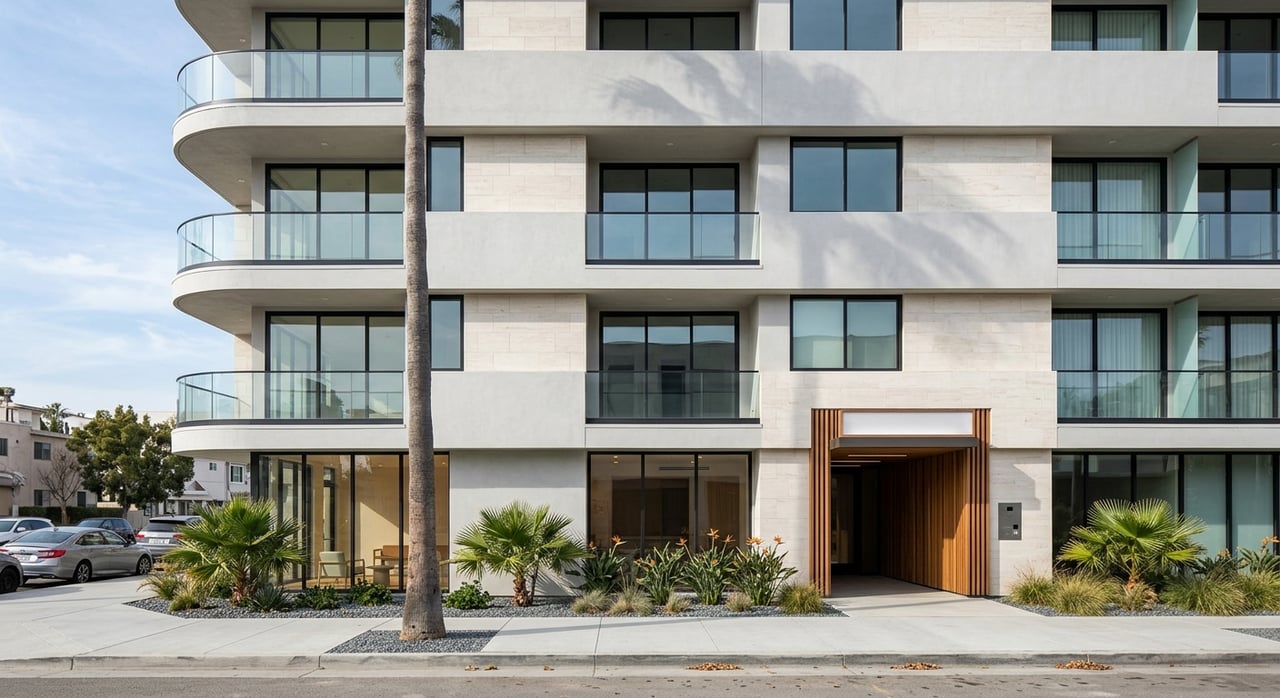
Wondering whether South Miami is a smart place to buy your first investment property? It is an appealing question for any buyer drawn to Miami-Dade’s premium submarkets but cautious about making a first move. South Miami offers strong location appeal, established demand drivers, and a compact footprint, but it also comes with higher entry costs and important due diligence items. Let’s dive in.
South Miami at a Glance
South Miami is a small city with a big location advantage. It covers about 2.27 square miles, and the U.S. Census QuickFacts for South Miami estimate a 2024 population of 13,207.
It is also a relatively high-value housing market. The same Census source shows a 59.4% owner-occupied rate, a median owner value of $736,900, and a median gross rent of $1,700, while Realtor.com’s South Miami market overview reports a median home sale price of $1.299 million and a median rent of $3,050.
Those figures do not measure the market in exactly the same way, so they are best used as directional signals rather than one-to-one comparisons. Even so, the takeaway is clear: South Miami is not a low-cost starter market. It reads as a premium, supply-constrained submarket where location matters.
Why First-Time Investors Look Here
For many first-time investors, South Miami stands out because it combines access, lifestyle convenience, and steady local demand drivers. The city borders the University of Miami’s main campus and sits near Coral Gables and Pinecrest, while its town center east of US-1 is described by the city as a shopping, dining, and entertainment destination on the City of South Miami community page.
South Miami also benefits from important employment and transit anchors. South Miami Hospital and Larkin Hospital South Miami are both located in the city, and Miami-Dade Transit’s Metrorail information highlights the rail connection that links this area to the broader county transit network.
From an investor’s perspective, that mix matters. A reasonable reading of the city’s location and anchor institutions is that South Miami can attract renters connected to the university, health care, and other nearby employment centers.
What the Rental Story Looks Like
South Miami appears to support renter demand, but on a smaller scale than many other Miami-Dade markets. According to Realtor.com’s local snapshot, the city had 105 rentals and 73 homes for sale, with the market described as balanced as of December 2025.
Rental pricing also points to a premium segment. Apartments.com’s South Miami rent guide shows average rents of about $2,175 for a one-bedroom and $3,558 for a two-bedroom as of March 2026.
That does not mean every property will perform the same way. It means the city has pricing strength and limited supply, which can be attractive if you buy carefully and underwrite conservatively.
Tenant Demand Drivers in South Miami
If you are buying your first investment property, one of the most important questions is simple: who is likely to rent here? In South Miami, several demand drivers stand out.
The city’s demographic profile adds useful context. Census data for South Miami shows median household income of $88,313, bachelor’s degree attainment of 55.2%, a foreign-born population share of 41.1%, and 58.6% of residents speaking a language other than English at home.
Taken together with the nearby university, hospitals, and transit access, that supports a broad potential renter base. Depending on the property and location, likely demand may come from university-affiliated renters, medical professionals, and local working households seeking convenience and access.
Property Types That Make Sense First
South Miami is not the kind of market where most first-time investors start with a large apartment project. The city’s own community characteristics report describes the residential market as limited and discusses a mix of single-family homes, condominiums, and rentals.
For many buyers, the most practical first acquisitions are likely to be:
- A smaller single-family rental
- A condominium with strong location appeal
- A modest multifamily asset, if available
That same city report notes a pipeline of mixed-use and transit-oriented projects near the South Miami Metrorail Station, including Edge at SoMi, student housing projects, and the South Miami Market redevelopment with roughly 300 residential units. This is worth watching because future supply can shape competition, tenant preferences, and pricing at the micro-market level.
Why Micro-Location Matters So Much
In South Miami, the citywide average only tells part of the story. The block, street access, and relationship to US-1 and the Metrorail corridor can have an outsized impact on daily convenience and renter appeal.
The city’s planning report says the Hometown District is the local activity center, with mixed commercial, office, retail, and residential uses. It also notes that east of US-1 accounts for 82% of customer visits to the study area and describes those pedestrian blocks as more comfortable, while intersections along US-1 are considered less comfortable from a walkability standpoint in the planning report.
That does not mean one section is universally better than another. It means your first investment decision should be highly specific. In South Miami, micro-location can influence rent potential, tenant interest, parking convenience, and day-to-day livability.
The Biggest Risk to Underwrite Carefully
If there is one issue you should not treat lightly in South Miami, it is flood exposure. The city’s National Flood Insurance Program page states that South Miami includes commercial and residential properties in federally designated Special Flood Hazard Areas and that flood insurance is not part of a standard homeowner policy.
The city also notes that structures in a Special Flood Hazard Area have a 26% chance of flooding during the life of a standard 30-year mortgage. For a first-time investor, that makes flood maps, elevation details, drainage, and insurance costs essential parts of underwriting.
This is where a promising property can become more expensive than it first appears. Purchase price alone is not enough. You need to evaluate the full cost of ownership.
Other Practical First-Investor Considerations
South Miami can be rewarding, but it asks you to be precise. Because US-1 is a major arterial with heavy daily traffic, access, parking, and ease of entry can matter more here than in a quieter suburban setting, according to the city community overview.
Management is another key issue. Given the city’s multilingual population and mixed housing stock, clear communication, responsive maintenance, and smooth operations can make a real difference in tenant experience and retention.
If this is your first investment purchase, you may want to think beyond acquisition and ask practical questions such as:
- How easy is parking for tenants and guests?
- How exposed is the property to flood-related costs?
- How competitive is the unit against nearby newer inventory?
- Is the location convenient to transit, hospitals, or the University of Miami?
- Will the property be straightforward to manage over time?
So, Is South Miami the Right Fit?
South Miami can be a strong fit for your first investment property if you want a premium location, understand that entry pricing is higher, and are comfortable doing detailed due diligence. The market’s appeal comes from its compact footprint, location near major anchors, relatively limited housing supply, and rents that reflect its premium positioning.
At the same time, this is not the easiest market for a beginner looking for a low-cost, low-complexity entry point. You need to pay close attention to flood exposure, micro-location, parking, and how incoming development may affect your property’s long-term position.
If you want a first investment in a well-located Miami submarket with real tenant appeal, South Miami deserves a close look. The key is buying selectively, underwriting conservatively, and matching the property to the kind of renter demand the location is most likely to attract.
If you are weighing South Miami against other Miami-Dade opportunities, elainekauffmann.com offers the kind of curated, data-driven guidance that can help you evaluate the right fit with clarity and confidence.
FAQs
Is South Miami a good place for a first investment property?
- South Miami can be a good first investment market if you are prepared for a premium price point and willing to study flood risk, location details, and property-level operating costs carefully.
Is South Miami renter-friendly for investors?
- South Miami appears to have meaningful renter demand, but it is a relatively small market with limited inventory and premium asking rents rather than a broad low-cost rental market.
What types of tenants are most likely in South Miami?
- Based on the city’s location and demographic profile, likely tenant demand may come from university-affiliated renters, health-care workers, and local professional households.
What is the biggest investment risk in South Miami?
- One of the clearest location-specific risks is flood exposure, so flood zone status, insurance needs, elevation, and drainage should be part of your due diligence.
What property types are most realistic for first-time investors in South Miami?
- For many first-time investors, the most practical options are smaller single-family rentals, condos, or modest multifamily properties rather than large apartment assets.
Does location within South Miami matter more than citywide averages?
- Yes. The relationship to US-1, the Hometown District, transit access, and block-level convenience can all influence renter appeal and investment performance.