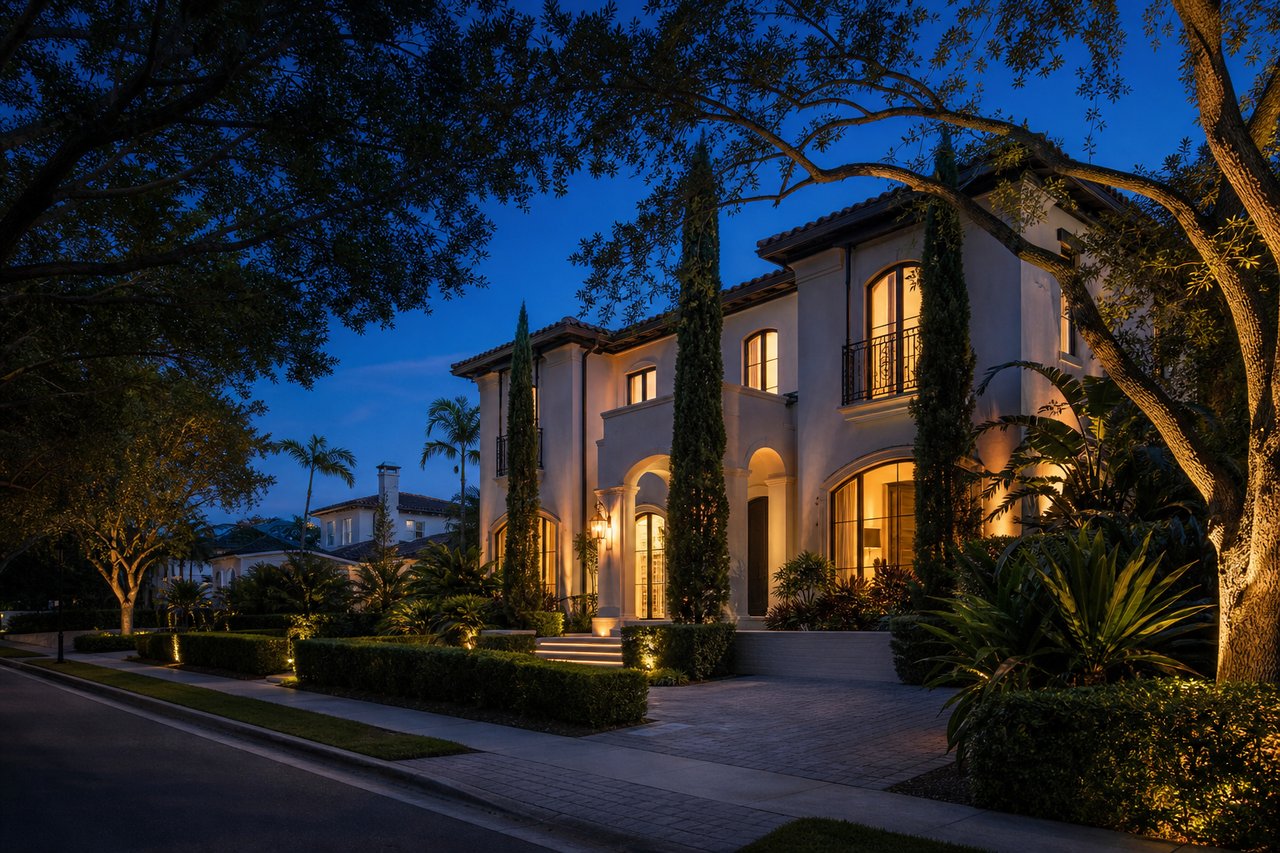
The migration of financial firms, hedge funds, and family offices to Miami has become one of the most consequential structural shifts in the city's luxury real estate market. Florida's permanent no state income tax advantage, combined with Miami's position as a global business hub, has turned what began as pandemic-era relocation into a lasting demand driver for high-end properties across Brickell, Coral Gables, Coconut Grove, and Key Biscayne.
What's Actually Driving the Finance Migration to Miami
I've been working with buyers in this market for 14 years, and the shift I've watched over the past several years is unlike anything I've seen before. The buyers aren't just wealthy individuals looking for a second home. They're principals, portfolio managers, and family office directors who are planting their primary flag here.
The single biggest structural driver is straightforward: Florida has no state income tax. For a fund manager or family office principal earning eight figures annually, that difference versus New York, Connecticut, or California isn't a perk. It's a material financial decision. This isn't a cyclical incentive that changes with a rate environment. It's baked into the Florida constitution, and it makes every luxury purchase here a compounding advantage.
Beyond taxes, Miami has built genuine infrastructure to support the financial sector. According to the Miami-Dade Beacon Council, Miami functions as a major finance and business center for South Florida and Latin America, with international banking relationships, a growing tech and fintech ecosystem, and direct flight access to major global capitals. That's not marketing copy. That's the reason a family office principal can run a global portfolio from Brickell and not feel like they're operating from a satellite office.
If you want to understand the full scope of who is relocating and what they're buying, my earlier post on billionaire migration reshaping Miami real estate covers the wealth-tier breakdown in detail.
What This Means for Luxury Buyers and Sellers Right Now
The Coral Gables Market in August 2026
Coral Gables remains one of the most sought-after addresses for finance-sector relocators who want estate-scale properties with privacy, walkability to Miracle Mile, and proximity to Brickell without living in a high-rise. According to Zillow's Coral Gables home values data (pulled August 2026), the overall median sale price across all property types in Coral Gables currently sits at $1,662,500, with homes selling in a median of 52 days. There are 283 active listings, 56 new listings added in the last 30 days, and 190 homes sold in the trailing 90 days.
Those numbers tell a story about a market that is active and balanced. While $1.66M represents the entry-to-mid level baseline for the neighborhood, incoming finance principals and family office directors target single-family estates in the $5M to $20M+ range. In that ultra-luxury tier, transaction timelines and due diligence naturally extend past standard market averages. What the broader data reflects is a healthy foundation with deep liquidity across the entire market.
Source: Zillow Coral Gables home values data, pulled August 2026, trailing ~90 days. Figures reflect general market medians across all residential inventory; single-family luxury estates in the $5M+ tier trade on distinct micro-market metrics. Individual home values depend on condition, street, build year, and timing.
Which Neighborhoods Are Finance Buyers Targeting
The pattern I see with finance-sector buyers isn't random. They cluster in specific neighborhoods for specific reasons.
Brickell: The epicenter of Miami's financial district. Ultra-luxury condos at the $3M to $10M+ range are the primary entry point. Buyers want walkability to their offices and the energy of a city neighborhood. The luxury condominium market in Miami has evolved specifically to serve this buyer profile.
Coral Gables: The choice for buyers who want a single-family estate with grounds, privacy, and a quieter residential character. Many finance principals with families land here once they're ready to establish permanent roots.
Coconut Grove: Appeals to the buyer who wants waterfront access, a bohemian-luxury aesthetic, and proximity to both Brickell and Coral Gables. Boutique and harder to find at scale, which keeps values strong.
Key Biscayne: The island enclave that attracts buyers who want maximum privacy, water on all sides, and a gated-community feel. Popular with international finance principals and family office principals who travel frequently and want security.
For a deeper look at waterfront options across these neighborhoods, my guide to Miami's top neighborhoods for waterfront luxury living walks through the distinctions in detail.
What Sellers Need to Know in This Environment
If you own a luxury property in any of these neighborhoods and you're thinking about selling, the finance migration is genuinely good news. You have a buyer pool that is deep, financially qualified, and motivated by factors that aren't going away. But there are a few things I tell every seller before we list.
First, disclosure compliance is non-negotiable in Florida luxury transactions. The Seller Property Disclosure required under Florida law is especially important for older estates and waterfront properties, where condition history, prior repairs, flood issues, and permitted work can all surface during a buyer's due diligence. Florida doesn't require a seller to use an attorney to close, but according to Florida Realtors, many sellers in luxury transactions choose to bring one in to help coordinate title, contract review, and closing documents. Finance-sector buyers typically arrive with sophisticated legal counsel of their own. Your disclosure needs to be thorough and accurate.
Second, transaction costs in Florida have fixed and negotiable components. The Documentary Stamp Tax on deeds is a fixed statutory cost set by the Florida Department of Revenue, not a negotiable line item. Other closing costs, including who covers what, are commonly negotiated between the parties and set in the contract. I always walk my sellers through a personalized net-sheet before we list, because the right number depends on your specific property, your contract terms, and your timeline. There's no substitute for running your actual numbers.
Third, broker compensation is fully negotiable. There is no standard or customary rate set by law. The listing fee is agreed in your listing agreement, and any compensation offered to a buyer's agent is a separate, optional decision. If you want to understand what makes sense for your situation, that's a conversation we should have directly.
The Longer-Term Outlook for Miami Luxury Real Estate
I'm careful about predicting markets, but I'm not careful about identifying structural trends. The Wall Street South narrative isn't a trend that reverses when interest rates move or when one firm decides to go back to New York. The infrastructure is here. The talent pipeline is here. The tax advantage is permanent.
What I watch more carefully is the composition of demand. Early in the migration wave, a lot of purchases were speculative or aspirational. What I'm seeing now in 2026 is a more deliberate buyer: someone who has already been living in Miami for a year or two, who has validated the lifestyle, and who is now upgrading from a rental or a starter luxury purchase into their permanent estate. That's a more durable buyer. They're not chasing a trend. They're buying a home.
Florida's tax environment continues to be a factor. If you want to understand how recent legislative changes could affect your property's value and carrying costs, my post on Florida property tax cuts and their impact on Miami luxury real estate breaks that down.
For sellers, the implication is clear: you have a well-capitalized, motivated buyer pool that isn't going anywhere. The question isn't whether demand exists. It's whether your property is positioned to capture it. Pricing, condition, and disclosure preparation are what separate a smooth transaction from a protracted negotiation.
Your specific position depends on your property's location, condition, and the current inventory in your micro-market. That's where a real analysis of your home's value comes in, not a general market read.
Frequently Asked Questions
Why are so many finance firms moving to Miami?
The primary drivers are Florida's permanent no state income tax advantage, Miami's established role as a global finance and business hub, and the quality of life the city offers relative to legacy financial centers. For fund managers and family office principals, the tax savings alone can be material enough to justify a full relocation rather than just a satellite presence. The infrastructure to support serious financial operations, including international banking access and direct global flight connections, has matured considerably.
Is Miami luxury real estate still in demand in 2026?
Yes. In Coral Gables alone, Zillow's August 2026 data shows 190 homes sold in the trailing 90 days with an overall market median sale price of $1,662,500 and 56 new listings added in the last 30 days—with prime finance-driven demand centered on single-family estates between $5M and $20M+. The buyer pool driving this demand includes finance-sector relocators, international wealth, and domestic high-net-worth buyers who have validated Miami as a primary residence market rather than a second-home destination. Demand is structural, not cyclical.
Which Miami neighborhoods are most popular with Wall Street buyers?
Brickell attracts buyers who want to be in the financial district itself, typically in ultra-luxury condominiums. Coral Gables draws finance principals who want estate-scale single-family properties with privacy and proximity to the city. Coconut Grove appeals to buyers who prioritize waterfront access and a boutique residential character. Key Biscayne is the choice for buyers who want island privacy and security. Each neighborhood serves a distinct buyer profile within the finance migration.
How does Florida's no state income tax affect luxury home demand?
For high-earning finance professionals, Florida's no state income tax is a permanent, structural advantage that makes relocating here a financial decision rather than just a lifestyle one. According to the Florida Department of Revenue, there is no individual income tax in Florida. For a principal earning eight figures annually, the annual savings versus a high-tax state can easily exceed the carrying costs of a luxury property, making the purchase a financially rational move beyond any lifestyle preference.
What disclosures do Miami luxury sellers have to provide?
Florida law requires sellers to provide a written Seller Property Disclosure unless a specific exemption applies. For luxury and waterfront properties, this disclosure is especially important because condition history, flood issues, prior repairs, and permitted work can all affect negotiations and risk management. Finance-sector buyers typically arrive with experienced legal counsel who will scrutinize the disclosure carefully. An attorney isn't required to sell a home in Florida, but working with one — alongside a knowledgeable listing agent — before you list is a smart way to prepare, and many luxury sellers choose to do so.
Who pays the Documentary Stamp Tax in Florida home sales?
The Documentary Stamp Tax on deeds is a fixed statutory tax set by the Florida Department of Revenue, not a negotiable expense. Who covers it between buyer and seller is commonly negotiated as part of the contract terms and can vary by transaction. In Miami-Dade County, most property types are also subject to an additional county-level surtax on top of the standard rate — condos and single-family homes are typically exempt from this surtax when they'll be the buyer's primary residence, but multi-family and non-homestead properties are not. I always recommend confirming the full tax picture and allocation in your specific contract with your attorney or closing officer, rather than assuming a default applies to your deal.
If you're a seller or buyer trying to understand how the finance migration affects your position in the Miami luxury market, I'd welcome the conversation. The market has real depth right now, and getting the strategy right from the start makes all the difference.
Schedule a consultation with Elaine to get a personalized read on your property's value and the right approach for your goals.
About Elaine Kauffmann
Elaine Kauffmann is a top 1% Miami-Dade luxury real estate broker with over $100M in career sales and 14 years of experience specializing in ultra-luxury homes, waterfront estates, and new developments across Coral Gables, Coconut Grove, Miami, Key Biscayne, and Miami Beach. Ranked among Compass's Top 100 Agents and featured in Mansion Global and Real Trends, she represents high-net-worth buyers and sellers seeking exceptional properties and investment opportunities in Miami's most prestigious neighborhoods.
Compass · 7864773500
Equal Housing Opportunity. Elaine Kauffmann, Broker Associate, licensed in Florida. Regulated by the Miami Association of Realtors (MiamiRe). This article is general information only and does not constitute legal, tax, or financial advice. Confirm your specific costs, disclosures, and transaction terms with your attorney, tax advisor, lender, or closing officer.