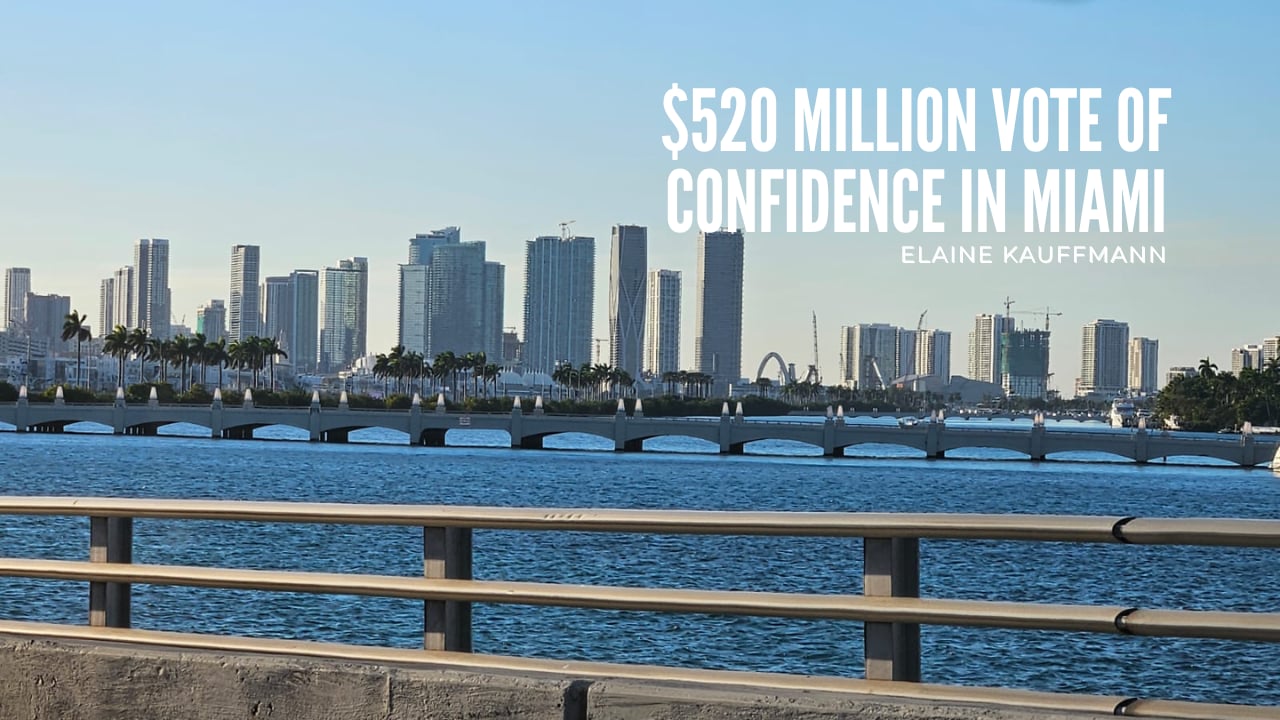
Miami’s global trajectory received another powerful endorsement with a $520,000,000 waterfront land acquisition in Brickell—one of the largest land transactions in the city’s history.
While the deal centers on Brickell, its implications extend well beyond one district. Institutional capital at this level reflects long-term conviction in Miami’s economic strength, lifestyle appeal, and global positioning. And when confidence moves at the core, it strengthens the surrounding luxury markets that define how people truly live in South Florida.
Brickell & Villa Miami: Elevated Urban Living
Brickell has firmly established itself as Miami’s financial nucleus and vertical luxury hub. Institutional investors are underwriting decades of growth—not short-term cycles—reinforcing Brickell’s role as a global business and lifestyle center.
Within this landscape, developments such as Villa Miami reflect the evolution of high-rise living. Beyond architecture and waterfront positioning, the convenience of butler service has become an essential amenity for residents who value discretion, personalization, and seamless daily living. This level of service signals how Miami’s luxury market continues to align with global standards seen in cities like New York, London, and Dubai.
Coconut Grove: Lifestyle, Waterfront, and Education Excellence
As Brickell strengthens as a financial epicenter, Coconut Grove continues to stand out as one of Miami’s most desirable residential enclaves.
Known for its lush streets, bayfront estates, and walkable village atmosphere, the Grove offers privacy without sacrificing proximity to the urban core. Importantly, some of the best schools in Miami are located in Coconut Grove, making it a premier destination for families seeking both academic excellence and refined living.
This combination of waterfront lifestyle, architectural character, and top-tier education creates enduring demand—particularly among long-term domestic and international buyers.
Coral Gables: Timeless Prestige
Coral Gables remains one of Miami’s most architecturally significant and stable luxury markets. Its Mediterranean design, expansive lots, and historic integrity continue to attract buyers looking for legacy properties. When institutional capital reinforces Miami’s strength, markets like Coral Gables benefit from renewed confidence and long-term value stability.
Key Biscayne: Scarcity and Security
With its island setting and limited inventory, Key Biscayne operates as a supply-constrained luxury market. Institutional investment across Miami reinforces the island’s reputation as a defensive, lifestyle-driven investment with generational appeal.
Miami Beach: Global Recognition
Few markets carry the international recognition of Miami Beach. From ultra-luxury condominiums to waterfront estates, Miami Beach remains a magnet for global wealth. As capital continues flowing into Miami, trophy properties in Miami Beach stand to benefit from strengthened global demand.
South Miami: Residential Strength
South Miami continues to attract buyers prioritizing space, privacy, and community. As Miami’s economic base expands, established residential neighborhoods with strong fundamentals remain well-positioned for sustained appreciation.
The Bigger Picture
A $520 million land acquisition is more than a headline—it is a signal.
It reflects institutional belief in Miami’s long-term growth, infrastructure, migration trends, and global financial relevance. According to insights shared by trusted Miami real estate broker Elaine Kauffmann, transactions of this magnitude often serve as early indicators of broader market resilience—particularly in established neighborhoods defined by lifestyle, education, scarcity, and service.
From Brickell and Villa Miami to Coconut Grove, Coral Gables, Key Biscayne, Miami Beach, and South Miami, the message is clear:
Miami is not emerging.
It is established.
And capital continues to validate its future.