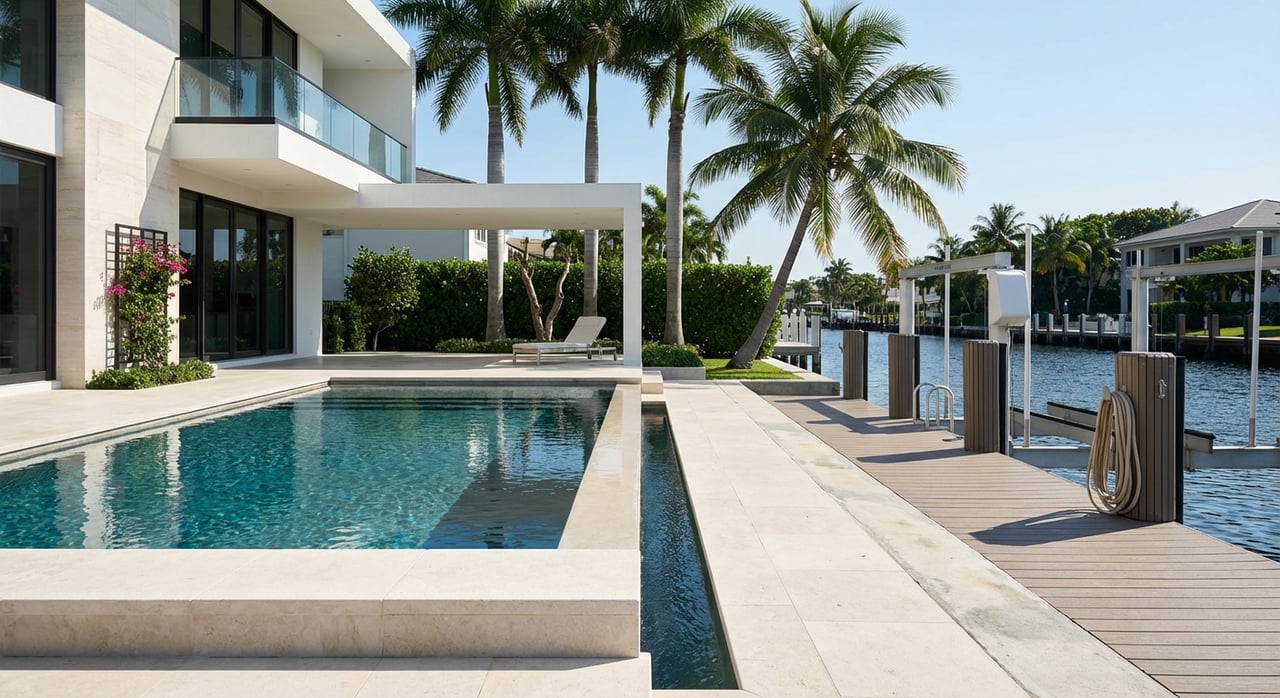
You are not just buying a house when you buy on the water in Coral Gables. You are choosing a view corridor, a dock configuration, and a long-term plan for resilience. The right lot can elevate your lifestyle and protect your investment. The wrong one can limit your boating, add hidden costs, and complicate permits.
This guide gives you a practical framework to evaluate Coral Gables waterfront estates. You will learn how lot geometry, dock access, seawalls, permits, and flood risk shape value. You will also see what to verify in due diligence so you can buy with confidence. Let’s dive in.
The Coral Gables waterfront at a glance
Coral Gables offers a spectrum of waterfront settings, from open Biscayne Bay panoramas to protected canals. Gated enclaves like Gables Estates and Cocoplum, including Tahiti Beach, are known for large parcels, deep-water dockage, and yacht-ready access. You will also find strong pockets in Riviera, Deering Bay, and select canal blocks with direct bay access.
At the luxury level, supply is scarce and many top-tier homes trade quietly. That means comps can be thin and timing matters. The broader Miami-Dade luxury market remains active, with concentrated activity at $1 million and above. For context on recent momentum, review the latest county data from MIAMI REALTORS.
Lot and water geometry drive price
Open bay vs. canal
Open-bay, or direct bayfront, lots deliver wide, unobstructed views and typically deeper water. These are premium from both a lifestyle and resale standpoint. Canal lots trade some view breadth for more protected water and sometimes easier mooring. Canal width and depth vary by block, which directly affects vessel size and maneuvering.
Linear frontage and lot size
Linear water frontage is one of the biggest value drivers. More waterfront feet can allow larger or multiple vessels, a broader dock program, and more expansive views. Lot area also matters. Larger parcels support privacy, guest structures, longer drives, and layered outdoor living.
Orientation, wind and wake
Consider sunrise versus sunset exposure and prevailing winds. East-facing lots may offer softer morning light, while west-facing lots can deliver signature sunsets. Siting near open channels may welcome cooling breezes, but also factor in potential wind-driven wake on certain edges.
Canal width and depth
Verify canal width and depth at low tide. These dictate the maximum length overall and beam you can safely accommodate at your dock. Dredging can be restricted by local and environmental rules, so plan vessel fit before you plan a lift.
Boating access and dock infrastructure
Direct, no-bridge bay access
For large yachts, no-bridge access to Biscayne Bay is a premium feature. Parts of Cocoplum and Gables Estates offer this benefit. If bridges are involved, confirm clearance and the navigable width of nearby channels so your boating plans match the property’s reality.
Docks, lifts and local limits
Coral Gables has detailed regulations for docks, davits, lifts, and bulkheads, including how far structures may extend waterward, side setbacks, and navigational clearances. Before you buy or modify, review the Coral Gables zoning code for your specific lot and confirm any conditions that limit the number of davits or lift projection.
Bayfront work often includes federal review. Certain docks and pilings require authorization from the U.S. Army Corps of Engineers in addition to city and county approvals, which the Coral Gables code recognizes. Build that timeline into your plans.
Nearby marina options
You will find robust marina support minutes away. Dinner Key Marina in Coconut Grove offers transient slips, fuel, pump-out, and service. Matheson Hammock Park Marina and Deering Bay Yacht Club are additional nearby resources for launch and slip services if you prefer to keep a larger vessel off-site.
Seawalls, bulkheads and ongoing costs
A sound seawall or bulkhead is essential. Coral Gables sets specific material and elevation standards. The code specifies a minimum bulkhead elevation of 6 feet NGVD, along with structural requirements. You can review these standards in the Coral Gables zoning code.
Plan for upkeep. Seawall replacement or major rehab can be a significant capital item. Industry sources suggest a ballpark of several hundred dollars to more than $1,000 per linear foot depending on design, materials, and site complexity. Use this range only as a starting point and obtain project-specific estimates; see this industry overview of seawall costs for context.
Practical tip: ask the seller for an inspection report and repair invoices, or schedule a marine engineer to evaluate toe conditions, piles, and drainage weeps. Many issues are hidden below the waterline.
Permits and approvals you should expect
City rules and setbacks
Coral Gables maintains a dedicated section on docks, moorings, davits, bulkheads, and yacht basins. It covers projection limits into the water, side setbacks, navigable passage widths, and engineering criteria. Before committing to design changes, confirm the applicable standards in the Coral Gables zoning code and align your plans with those limits.
County, state and federal layers
Waterfront improvements typically undergo multi-agency review. For Miami-Dade, that can include environmental permits through DERM and related procedures. The County has adopted updates to streamline parts of the seawall permitting process and administrative timelines. You can read the legislative summary of those changes in the County’s seawall permitting update.
At the state level, confirm whether the Florida Department of Environmental Protection’s Coastal Construction Control Line program applies to your shoreline. Start with the Florida DEP CCCL resources and consult your engineer for site specifics. For work in navigable waters, expect to involve the U.S. Army Corps of Engineers along with city and county reviewers.
Climate, flood and insurance planning
Waterfront estates face rising sea levels and more frequent high-tide flooding over a typical ownership horizon. Regional guidance from the Southeast Florida Regional Climate Change Compact advises planning for roughly 10 to 17 inches of sea-level rise by 2040 relative to 2000. Review the Compact’s sea-level indicators and work with your design team to future-proof major improvements.
Confirm your flood zone early. Use FEMA’s Map Service Center and obtain the property’s Elevation Certificate from a licensed surveyor or engineer. Lenders often require it for underwriting, and it is essential for proper rating if you carry flood insurance. This FEMA resource on Elevation Certificates is a helpful primer and explains how these documents support Letters of Map Amendment when appropriate.
Smart due diligence checklist
Move quickly on these items as soon as you open escrow:
- Order the current boundary and topographic survey. Request recorded as-built drawings for the seawall, bulkhead, and dock. Confirm where the property line meets the water.
- Ask for the latest seawall inspection and any repair invoices. If none exist, hire a marine engineer for a full assessment, including below-water elements.
- Verify dock permits with the City of Coral Gables and Miami-Dade County. Confirm any conditions that limit vessel size, number of davits, or lift projection. The city zoning code outlines those numeric standards.
- Check FEMA flood map panels and request the Elevation Certificate. If the property is in a Special Flood Hazard Area, obtain current flood insurance quotes and ask about mitigation credits or private market options. The FEMA guide to Elevation Certificates explains what to look for.
- Review HOA and covenant rules if you are buying in a gated enclave. Clarify any shared maintenance or assessments for common seawalls or basins.
Lifestyle and design choices that matter
Beyond specifications, think about how the property lives. Wide footprints support resort-style outdoor programs such as covered lanais, lap pools, and pool houses. Glass-forward architecture can frame water like art. If you entertain, plan service drives and discreet arrival zones.
For boaters, design the dock as part of your daily flow. Consider a shaded prep area, storage for gear, and an efficient path from kitchen to boat. If you favor calm water over horizon views, a wider protected canal may suit you better than a more exposed point lot. If sunrise coffee on the terrace is your ritual, an east-facing bayfront might be the dream.
Work with a local strategist
Given the complexity of lot features, code limits, multi-agency permits, and evolving climate standards, you deserve a buyer’s agent who treats details like these as core to value. Elaine Kauffmann pairs a boutique, design-led approach with deep neighborhood knowledge across Coral Gables and Miami’s top waterfronts. Her process is hands-on, bilingual, and grounded in clear guidance so you can buy with confidence and enjoy the waterfront lifestyle you envision.
Ready to start? Explore your options and request a bespoke plan with elainekauffmann.com.
FAQs
Do Coral Gables waterfront lots always include a dock?
- Not always; docks can be separate permitted improvements, so confirm inclusion and verify permits or grandfathered status with the City and County.
How important is no-bridge bay access for buyers with larger boats?
- Very; no-bridge access increases functional boating value and flexibility for large vessels, while bridges can limit height and sometimes length.
What permits will I need for a new dock or lift in Coral Gables?
- Expect City approvals under the Coral Gables zoning code, Miami-Dade environmental review, and often U.S. Army Corps authorization for bayfront work.
How much does a seawall cost to replace or rehab?
- Costs vary widely; an industry overview suggests several hundred dollars to more than $1,000 per linear foot depending on design and site, so obtain project-specific bids.
How should I plan for sea-level rise when renovating a waterfront estate?
- Use regional guidance of about 10 to 17 inches by 2040 and work with your engineer to address elevations, utilities, and drainage for long-term resilience.
How do I confirm my flood zone and insurance requirements before closing?
- Check FEMA flood maps and get an Elevation Certificate from a licensed surveyor or engineer; lenders and insurers rely on it for underwriting and rating.