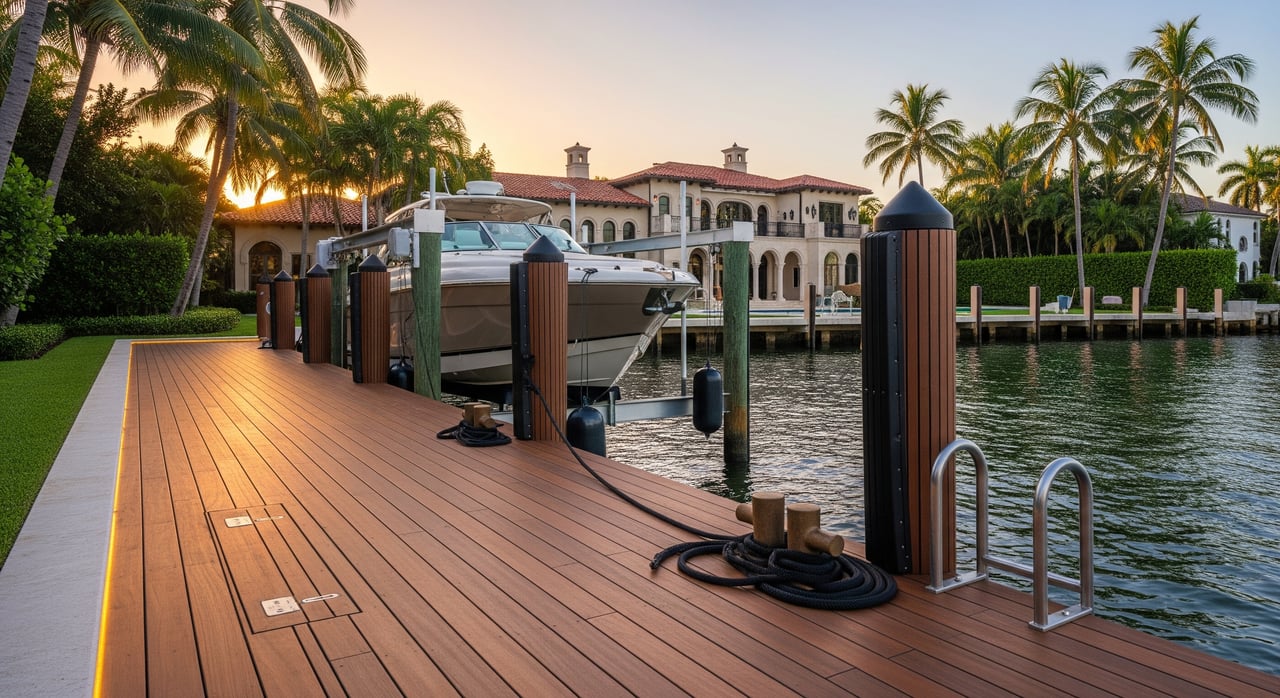
Buying a Coral Gables waterfront home should start with one question: will your boat actually work at this dock? The right property gives you smooth access to Biscayne Bay, safe storage, and a low‑stress routine. The wrong one can limit your boating or add surprise costs. In this guide, you will learn how to match your boat to the right dock, how to verify depth and bridge clearance, what permits matter, and the comfort factors that affect daily life. Let’s dive in.
Access to Biscayne Bay
Getting from your dock to open water is the most important factor. You need enough depth for your draft, a route that clears any bridges, and a plan for posted speed zones. If any of these are off, the dock will not meet your needs.
Water depth basics
Depth at the dock and along the route can vary by canal. Narrow interior canals can be shallow, often in the low to mid single digits in feet. Dredged bayfront areas and main channels tend to be deeper. Treat these as general patterns and verify exact depths for your slip and route.
How to verify depth
- Review charted depths on the official NOAA nautical charts for Biscayne Bay.
- Check tide ranges and timing with NOAA Tides & Currents.
- For federal channels, confirm maintenance dredging details with the U.S. Army Corps of Engineers Jacksonville District.
- During your inspection period, request recent soundings or hire a marine survey to measure depth at the dock and along your expected route.
Bridge clearances and schedules
Map your path to the bay and list every bridge or low crossing. Compare the posted vertical clearance at high water to your boat’s air draft. For official data and notices about openings or restrictions, use the U.S. Coast Guard bridge database and Local Notices to Mariners.
Wake zones and manatee protection
Your run time to open water can depend on slow‑speed or idle zones. Coral Gables canals and nearby bay stretches include protected areas for manatees and residential shorelines. Review the Florida Fish and Wildlife manatee and speed zone maps to understand local rules along your route.
Tides and currents
The bay’s tidal range is modest but still matters for draft‑limited slips. Always plan for the lower end of the tide cycle. Checking local predictions on NOAA Tides & Currents helps you avoid tight margins at low water.
Dock types and equipment
Not all docks are created equal. The structure, lift capacity, and utilities affect daily use and long‑term maintenance.
Common dock options
- Fixed pile docks. Strong and stable for larger loads. Inspect pilings and caps for wear.
- Floating docks. Rise and fall with the tide, which makes boarding easier. They can feel less stable in high wake areas.
- Seawalls with finger piers. Very common in Coral Gables canals. Seawall condition often controls whether you can add or upgrade a lift.
- Boat lifts, davits, and hoists. These keep your hull out of the water and reduce fouling. Check lift capacity, width, and available power.
Materials and condition
Expect a mix of treated timber, composite decking, concrete, aluminum, and plastic floats. Typical issues include pile rot or corrosion, seawall undercutting, float degradation, and electrical corrosion. Hire a marine structural engineer or qualified dock contractor for the seawall and pilings, and a marine electrician for shore power and lifts.
Permitting and environmental rules
Most new docks, lifts, and any dredging need permits. You will work within city, county, state, and sometimes federal rules. Start with the City of Coral Gables building permits and codes, then review county rules at Miami‑Dade County environmental permitting. The Florida Department of Environmental Protection permitting and the U.S. Army Corps of Engineers Jacksonville District regulate environmental and submerged lands work. Ask the seller for permit history and as‑built drawings to confirm what is existing and legal.
Orientation, wind, and privacy
The best dock is comfortable to live with, not just functional. Consider how the sun and wind interact with your shoreline.
Sun exposure
- East‑facing docks get cooler afternoons, which can protect finishes from intense sun.
- West‑facing docks enjoy sunsets but can feel hotter and increase UV exposure.
- North exposure sees less direct sun overall. Match the orientation to your daily routine and consider shade solutions that meet local rules.
Prevailing winds and waves
Daytime sea breezes in Miami often flow from the east to southeast. Bayfront docks can feel more exposed to chop and wakes when the wind is onshore. Recessed canal docks are calmer but may have tighter maneuvering space. Consider how wind, wake, and boat traffic will affect docking and noise.
Privacy and sight lines
Look at angles to neighboring docks, distance to the opposite seawall, and existing vegetation. Simple choices like angled finger piers or plantings can improve privacy. Check local permitting before adding vertical screens or new landscape elements on the seawall.
Coral Gables micro‑pockets to know
Neighborhood character affects dock size, depth, and rules. Verify details for the exact property and canal.
Gables Estates
Large lots and private canals near the bay create opportunities for deeper slips and substantial lift systems. Seawall integrity is a priority due to high property values and boat size.
Cocoplum and similar gated communities
Many homes sit on deeper canals with private docks. Expect HOA standards for dock design and rules on use. Always review community guidelines before planning upgrades.
Ponce‑Davis and eastern Coral Gables
Bayfront and canal properties here tend to have more direct access to main channels. Depths are often favorable, but posted speed and wake zones still shape your run time.
Interior canals and older neighborhoods
Mid‑century canals can be narrower and shallower. These areas may favor shallow‑draft center consoles, flats boats, or lifts for smaller vessels. Turning room and beam clearance are key checks.
Buyer checklist for dockage
Use this list before you write an offer and during inspections.
Boat fit and maneuvering
- Confirm your boat’s LOA, beam, draft, and air draft.
- Check turning room and side clearance at the dock.
Route and access
- Chart your path to Biscayne Bay and note bridges and channels.
- Verify clearances and opening schedules using the U.S. Coast Guard notices and bridge data.
Depth and tides
- Review charted depths with NOAA nautical charts.
- Request recent soundings or a marine survey during contingencies.
- If shoaling is suspected, negotiate remedies or protective clauses.
Seawall and dock condition
- Hire a marine structural engineer or qualified contractor to inspect.
- Ask for seawall age, repair history, and any engineering reports.
- Confirm that future replacement or upgrades are allowable with permits.
Permits and legal rights
- Request copies of all permits and any recorded easements or riparian rights.
- Confirm whether the existing dock is permitted, grandfathered, or out of compliance.
- Check HOA rules for dock dimensions, boat types, and slip leasing.
Environmental and speed zones
- Review FWC manatee and speed zone maps.
- Confirm whether submerged vegetation or protected habitat affects your plan.
Utilities and amenities
- Verify shore power capacity, wiring condition, and water at the dock.
- Plan for lift capacity that matches boat weight and beam.
- Ask about lighting rules, Wi‑Fi coverage, and pump‑out access if needed.
Insurance and financing
- Check the property’s flood zone on the FEMA Flood Map Service Center.
- Confirm dock and seawall coverage with your insurer and any mitigation requirements.
Local intel and contingencies
- Speak with nearby marinas or neighbors about wakes, traffic, and seasonal issues.
- Include a marine inspection contingency and request permit records from the seller.
What to do next
The smartest move is to verify early. Chart your route, check depths and bridges, and have the seawall and dock inspected before contingencies expire. A focused plan can save you time and protect your investment.
If you are ready to search for Coral Gables waterfront that fits your boat and lifestyle, let’s talk. You will get boutique, high‑touch guidance backed by market insight and a design‑forward approach. Start the conversation at elainekauffmann.com.
FAQs
What should I check first when buying a Coral Gables waterfront home?
- Start with access to Biscayne Bay, including depth along the route, bridge clearances, and any slow‑speed zones that affect your run time.
How do I confirm water depth for a specific Coral Gables canal?
- Review NOAA nautical charts and then obtain recent soundings or a marine survey during your inspection period for on‑site measurements.
Where can I find official bridge clearance information near Coral Gables?
- Use the U.S. Coast Guard bridge database and Local Notices to Mariners to check posted clearances and any schedule changes.
Do I need permits to add a boat lift or rebuild a dock in Coral Gables?
- Yes, most dock or lift work requires approvals from the City of Coral Gables, Miami‑Dade County, and often state or federal agencies depending on scope.
How do manatee and wake zones affect boating from my dock?
- Speed limits and seasonal protections can slow your route, so review FWC manatee and speed zone maps to understand local restrictions.
Should I worry about flood zones for Coral Gables waterfront homes?
- Yes, check your flood zone at the FEMA Flood Map Service Center and discuss insurance requirements and mitigation with your carrier.